Innovations in Person-Centered Care & Dementia Technology

At Cascade Living Group, we believe that every person’s story deserves to be honored, regardless of the challenges that memory loss may bring. When a loved one begins the journey with Alzheimer’s or other forms of dementia, the world can start to feel a little smaller and perhaps a little more uncertain for both the senior and their family. We often find ourselves wishing for more ways to keep them safe, more ways to hear their laughter, and more ways to stay connected to the person they have always been.
In recent years, the landscape of support has changed beautifully through the thoughtful integration of memory care technology. While we know that no device or software can ever replace the warmth of a hand-hold or the comfort of a familiar voice, innovations in person-centered care dementia technology are playing an increasingly vital role in modern care.
These tools are not meant to replace human interaction; rather, they are designed to support it – creating a safer, more predictable environment where quality of life can truly flourish.
Why Technology Matters in Memory Care
The journey of memory loss often brings hurdles like wandering, confusion, and communication barriers that can lead to feelings of agitation. For an adult child or a spouse, these challenges often translate into a constant state of worry. This is where senior living technology steps in as a quiet, supportive partner. By utilizing modern tools, we can help residents maintain a sense of dignity and independence for longer.
When we talk about technology and person-centered dementia care innovations, we are talking about finding ways to meet each resident exactly where they are. For one person, it might be a tool that helps them remember a grandchild’s name; for another, it might be a sensor that ensures they don’t take a tumble in the middle of the night.
These innovations support our dedicated care teams by providing them with deeper insights, allowing them to spend less time on paperwork and more time building connections with those they serve.
Key Goals of Technology in Memory Care
The primary heartbeat behind any technology in care homes is simple: to enhance the human experience. We focus on four main pillars when integrating these tools. Primarily is safety – providing a safety net that allows residents to move freely without constant intervention. Second is the support of daily routines, which provides a sense of calm and structure.
Third, we look for ways to encourage emotional well-being and engagement, ensuring that every day has moments of joy and purpose. Finally, we prioritize communication. Technology should act as a bridge, keeping families in the loop and ensuring that the circle of care remains strong, transparent, and deeply personal.
Safety-Focused Technology in Memory Care
GPS Tracking and Wearables
One of the greatest fears for families is the risk of wandering. In the past, the only solution was often locked doors, which can feel restrictive. Today, technology for dementia care includes discreet GPS tracking and wearable devices. These aren’t bulky or clinical; they are often integrated into comfortable wristbands or pendants.
Using geofencing, our teams are alerted if a resident moves beyond a safe area, allowing for a fast, gentle response that maintains the resident’s dignity.
Motion Sensors and Detectors
Similarly, fall detection and motion sensors have revolutionized technology in long-term care. These smart sensors can detect if a resident has fallen or if their movement patterns change significantly – such as being inactive for an unusual amount of time.
Instead of waiting for a scheduled check-in, staff receive real-time alerts. This balance of safety and freedom is the cornerstone of modern memory care, ensuring that residents can explore their surroundings with a silent partner watching over them.
Monitoring and Smart-Home-Style Technology
Monitoring Devices
To keep our environments feeling like home, we lean into smart technology that blends into the background. In-room monitoring devices now allow us to track motion without the use of invasive cameras. This respects a resident’s privacy while still alerting us if they get out of bed in the middle of the night or if their routine changes unexpectedly.
Smart-Home Controls
We also see the incredible benefits of automated smart home controls. Lighting that adjusts automatically to match the time of day can help reduce the confusion often associated with sundowning.
In some settings, smart appliances can be monitored or automatically disabled to prevent accidents, allowing those in earlier stages of memory loss to enjoy the familiarity of a kitchen environment without the risks.
Camera Systems
When family members request it, in-home cameras can provide reassurance, provided they are used ethically and with full consent, ensuring that the residents’ privacy is always the top priority.
Communication and Connection Technologies
Specialized Phones
Distance should never be a barrier to love. We have seen how simplified phones – those with large buttons and pre-programmed photos of family members – can transform a resident’s day. Instead of struggling with a complex interface, a senior can simply press a picture of their son or daughter to start a conversation.
Video Devices
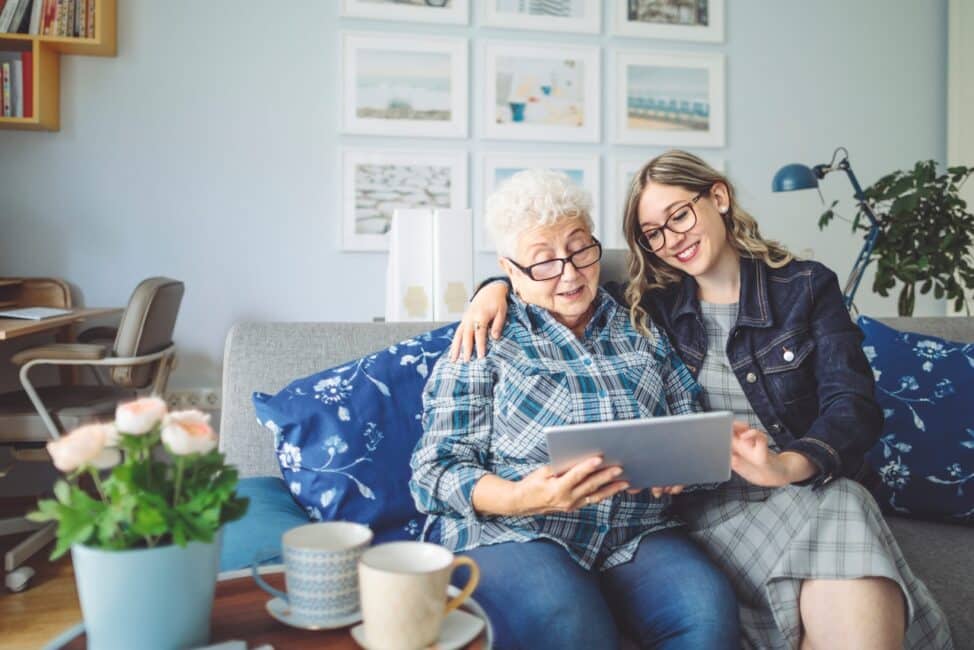
Video calling and virtual visits have become essential tools for reducing isolation. Seeing a familiar face on a screen can spark a level of recognition and joy that a standard phone call might not.
Monitoring Devices
Additionally, two-way monitoring devices allow caregivers or family members to offer a quick word of reassurance remotely, which can be incredibly grounding for a resident experiencing a moment of anxiety.
Routine, Reminder, and Orientation Tools
Dementia-Friendly Clocks and Calendars
Confusion about the time or date is a common source of stress for those living with dementia. Dementia-friendly clocks and calendars provide clear, high-contrast displays that state the day of the week and the time of day (e.g., “It is Tuesday morning”). This simple clarity can significantly reduce daily anxiety.
Audio and Visual Systems
We also utilize audio and visual reminder systems for medications, meals, and appointments. Hearing a reminder in a familiar, recorded voice of a loved one or a favorite caregiver can make these prompts feel less like a command and more like a gentle nudge from a friend.
Medication Management Systems
Automated medication management systems ensure that the right dose is taken at the right time, virtually eliminating errors and providing peace of mind for everyone involved.
Cognitive Engagement and Emotional Well-Being
Apps and Games
Technology can also be a source of immense fun and brain-boosting activity. From tablets pre-loaded with brain exercises and puzzles to interactive gaming systems that project images onto tables, these tools encourage both movement and social interaction. We often see residents laughing together as they pop virtual bubbles or sweep digital leaves, which stimulates both their minds and bodies.
Music
Music and reminiscence technology are perhaps the most heartfelt applications of these tools. We can create personalized playlists that trigger deep, positive memories. Watching a resident who has been non-verbal suddenly hum along to a favorite song from their youth is a powerful reminder of why we do what we do.
Immersive and Emerging Technologies
Virtual Reality
The future is even more promising with the advent of virtual reality (VR). For a resident who can no longer travel, VR can transport them to a calming beach or a familiar childhood park. These immersive experiences are proving highly effective at reducing agitation and providing sensory stimulation that is both soothing and engaging.
Multisensory Tools
We are also seeing growth in multi-sensory tools that use light, sound, and touch to help residents regulate their emotions and find a sense of peace during a difficult day.
Wearables and Health Monitoring
Smart Watches and Biometric Sensors
In a memory care setting, these devices can monitor sleep patterns and vitals, providing our medical teams with early warning signs of health concerns, such as a brewing infection or a change in heart rate. By catching these patterns early, we can often intervene before a minor issue becomes a major health event.

The Heart of the Matter: Benefits and Considerations
While the benefits for residents are clear, we must also acknowledge how these tools support our staff. By reducing the manual workload of monitoring, technology allows our caregivers to focus on the emotional needs of our residents. It leads to faster response times and a much deeper understanding of each individual’s unique patterns and needs.
However, we are always mindful that technology is not a one-size-fits-all solution. Too many gadgets can be confusing, so we choose tools that are intuitive and truly helpful. We prioritize privacy, ethics, and data security above all else, ensuring that every resident’s information is protected and that their dignity is never compromised for the sake of a new feature.
Looking Forward Together
The future of memory care is bright, with AI and predictive monitoring promising even more ways to personalize support. But at Cascade Living Group, our focus will always remain on the person, not the device. We use these innovations to build a world where seniors feel safe, families feel at peace, and every moment is an opportunity for a meaningful connection.
Understanding Technology in Memory Care: Your Questions Answered
See Our Heart-Centered Approach for Yourself
If you’re looking for a place where innovation meets genuine compassion, we are here to help. Would you like to learn more about how we blend technology with personal care? Find a Cascade Living Group community near you today and schedule a tour.