The Best Card Games for Seniors with Dementia

At Cascade Living Group, we believe that the smallest moments often hold the most heart. Whether it’s the smell of morning coffee or the familiar shuffle of a deck of cards, these rhythmic patterns of life provide a sense of safety and belonging. For families navigating the journey of memory care, finding ways to stay connected is a top priority.
Card games for seniors are more than just a way to pass the time; they are a bridge to the past and a tool for engagement in the present. Because cards are tactile, visual, and deeply familiar to most older adults, they offer a gentle form of stimulation that doesn’t feel like therapy. The goal isn’t to crown a winner or master a complex strategy – it’s about the laughter shared across the table and the simple joy of participation.
Why Card Games Are Beneficial for Seniors with Dementia
The beauty of a deck of cards lies in its versatility. For those living with cognitive changes, card games for older adults provide vital cognitive stimulation without overtaxing the brain. Matching a red heart to another red heart or following the sequence of numbers can help maintain focus and visual recognition.
Beyond the cognitive aspect, the emotional benefits are profound. Many seniors have played cards their entire lives, and the act of holding a hand of cards can trigger muscle memory, reduce anxiety, and provide a sense of accomplishment. In a world that can sometimes feel confusing, the structured rules of a simple game offer a comforting predictability. Most importantly, senior card games foster social engagement, giving families and caregivers a structured way to communicate and bond.
Choosing the Right Card Games by the Dementia Stage
As we walk alongside residents at Cascade, we’ve learned that meeting them where they are is the key to a positive experience. This means adapting the game to fit their current cognitive stage.
Early-Stage Dementia
In the earlier stages, many seniors still enjoy the thrill of a light strategy. Card games for memory like Rummy or Whist can often be played successfully, provided the pace is slowed down. The focus here is on maintaining those long-term skills while enjoying the flow of conversation.
Moderate Dementia
As memory loss progresses, simple card games for dementia patients that rely on repetition and visual cues work best. At this stage, we focus on games that involve clear matching or simple turn-taking. The visual nature of the cards helps guide the player, reducing the need to remember complex instructions.
Late-Stage Dementia
In the later stages, the game may evolve into a sensory-based activity. Cards for dementia can simply be about the tactile feel of the lamination, the bright colors of the face cards, or the repetitive motion of sorting. This is about comfort, presence, and the soothing nature of a familiar object.
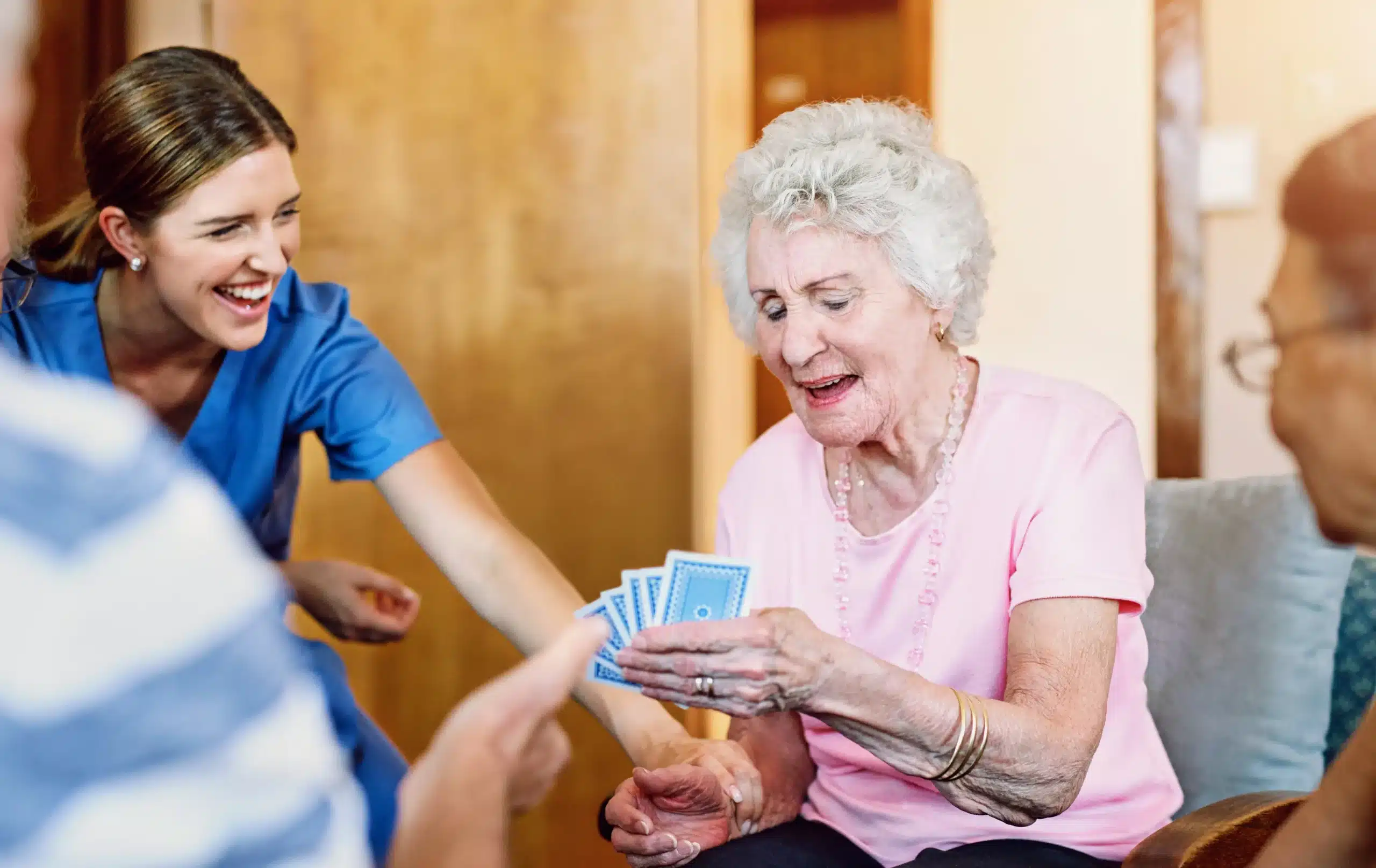
Best Card Games for Seniors with Dementia
When looking for the best card games for dementia patients, simplicity, familiarity, and flexibility matter most. Games with clear rules, repetitive actions, and minimal strategy are the most enjoyable and successful. Here are ten favorites we love to see in our communities:
- Go Fish: This classic is wonderful because it encourages social interaction and repetitive matching. It’s easy to adapt – if a full deck is too much, you can play with just two suits to make matches easier to find.
- War: There is almost no strategy required for War, making it one of the most accessible memory card games for adults. It’s a high-card-wins game that moves quickly and keeps the momentum going without any stress.
- Crazy Eights: Similar to Uno, this game focuses on matching either the suit or the number. It’s great for visual recognition and offers just enough variety to keep things interesting.
- Old Maid: This game is excellent for those who enjoy a bit of character and humor. The clear goal – avoiding the one odd card – makes the objective very easy to follow.
- UNO!TM: Color and number matching make Uno visually intuitive. The bold design of the cards can be especially helpful to individuals who benefit from clear visual cues.
- Solitaire (Simplified Version): For those who prefer independent activities, a simplified form of Solitaire can provide calming structure and gentle mental stimulation.
- Matching or Memory Card Games: Using large-print or picture-based decks, players turn over cards to find pairs. This can be adjusted to the individual’s comfort level by reducing the number of cards in play.
- Rummy (Basic Matching Version): A simplified version that focuses only on matching sets or runs – without scoring complexity – can work well for those who previously enjoyed the game.
- Slapjack: Players take turns placing cards, and when a Jack appears, the first person to “slap” it wins the pile. The repetitive structure and clear visual trigger keep it easy to understand.
- Beggar My Neighbor (Simplified): This turn-based game involves placing cards down in sequence with occasional simple challenges. With guidance, it can be a gentle way to encourage attention and engagement.
As with any activity, the key is flexibility. Rules can be simplified, decks can be reduced, and the focus should remain on enjoyment rather than competition. The goal isn’t perfect play – it’s meaningful engagement, connection, and moments of success.
Simple Card Activities for Gentle Engagement
Sometimes, a full game with rules can feel overwhelming. On those days, we pivot to simple activities that still offer the benefits of card games for memory without the pressure of playing.
Sorting cards by color (red and black) or by suit is a therapeutic and calming task. You might also try laying cards out in a low-to-high sequence or simply matching pairs face up on the table. For some, the simple act of shuffling or holding the cards provides a sensory comfort that grounds them in the moment.
Making the Experience Positive and Meaningful
At Cascade, we prioritize the person over the process. When playing cards with a loved one, try to play alongside them rather than against them. If they place a card down that doesn’t quite fit the rules, let it go. The correct way to play is whatever way brings a smile to their face.
To keep things frustration-free, consider using dementia-friendly card tools like large-print decks or card holders that take the strain off tired hands. If you notice signs of fatigue or agitation, it’s perfectly okay to end the game early. We celebrate the participation, not the scoreboard.
FAQs About Card Games for Seniors with Dementia
Experience the Difference
At Cascade Living Group, we understand that care is about more than just clinical needs; it’s about heart, heritage, and the joy of a well-played game. We strive every day to provide the environment and the activities that honor residents’ life stories.
If you are looking for a community that understands The Difference Between Living and Living Well, we would love to meet you. Would you like to learn more about our personalized memory care programming or tour one of our warm, family-oriented communities? Contact Cascade Living Group today.