Activities for Seniors in Assisted Living

When exploring assisted living options, most families start with the practical details: apartment layouts, care services and dining plans. While these fundamentals ensure safety and comfort, day-to-day engagement is what makes a place feel like home.
Activities in assisted living are designed to bring purpose, movement, creativity and social connection to daily life. Rather than simply filling time, structured and informal activities give residents consistent opportunities to pursue hobbies, meet neighbors and stay active.
Because every resident has unique interests and preferences, activity programs are designed to provide meaningful choices. While specific calendars vary by community, the objective is universal: creating an environment where residents feel connected, supported and as independent as possible.
Why Meaningful Activities Matter in Assisted Living
A balanced activity schedule supports overall well-being. Having regular access to social, physical, cognitive and spiritual opportunities helps residents maintain personal routines and pursue hobbies that matter to them.
Regular participation in community life supports health in measurable ways:
- Cognitive Vitality: Keeps the mind active through learning, problem-solving and conversation
- Physical Function: Supports mobility, flexibility and balance through safe movement
- Emotional Health: Reduces isolation by providing natural opportunities for friendship
Social Connection and Emotional Well-Being
Regular social contact is essential at every stage of life. Shared meals, interest clubs, card games and casual conversations in common areas provide natural ways to build friendships.
A strong community calendar offers options for different personalities. Large group gatherings, small hobby circles and individual visits ensure that both outgoing residents and those who prefer quiet settings can participate comfortably.
Physical Wellness and Everyday Independence
Gentle physical activity helps preserve functional independence. Group movement classes focus on strength, balance, mobility and flexibility – key factors in maintaining confidence during daily tasks.
Physical programs are modified to match individual abilities and care plans. Alignment with the CDC physical activity guidelines for older adults ensures that movement programs remain safe, effective and accessible for all participants.
Cognitive Engagement, Creativity and Purpose
Mental engagement takes many forms, from educational discussions to creative expression. Book clubs, guest lectures, puzzles and art classes encourage ongoing curiosity.
Taking part in creative projects or leading a resident group can bring a meaningful sense of accomplishment. Research from the National Institute on Aging shows that staying involved in enjoyable, rewarding activities can help older adults maintain a sense of purpose.
Popular Activities for Seniors in Assisted Living
Activity calendars serve as a dynamic menu of choices rather than a rigid set of requirements. Program directors design diverse activities for seniors in assisted living so that residents of all physical and cognitive abilities can participate.
Adaptations are built directly into daily programming. Seated exercises, simplified steps and low-sensory options ensure that activities remain inclusive.
Fitness and Movement Activities
Physical movement programs prioritize safety, social motivation and personal progress:
- Chair Exercise & Gentle Stretching: Full-body movement designed to improve range of motion while safely seated
- Walking Clubs: Regular indoor or outdoor walks that blend light cardiovascular exercise with conversation
- Strength & Balance Classes: Exercises using lightweight resistance bands or balance bars to reduce fall risks
- Tai Chi & Mindful Movement: Slow, controlled sequences that promote balance, posture and focus
- Dance & Rhythm Groups: Low-impact movement set to familiar music from various eras
- Aquatic Fitness: Water-based exercise that offers low-impact resistance while remaining gentle on joints
Games, Learning and Brain Fitness
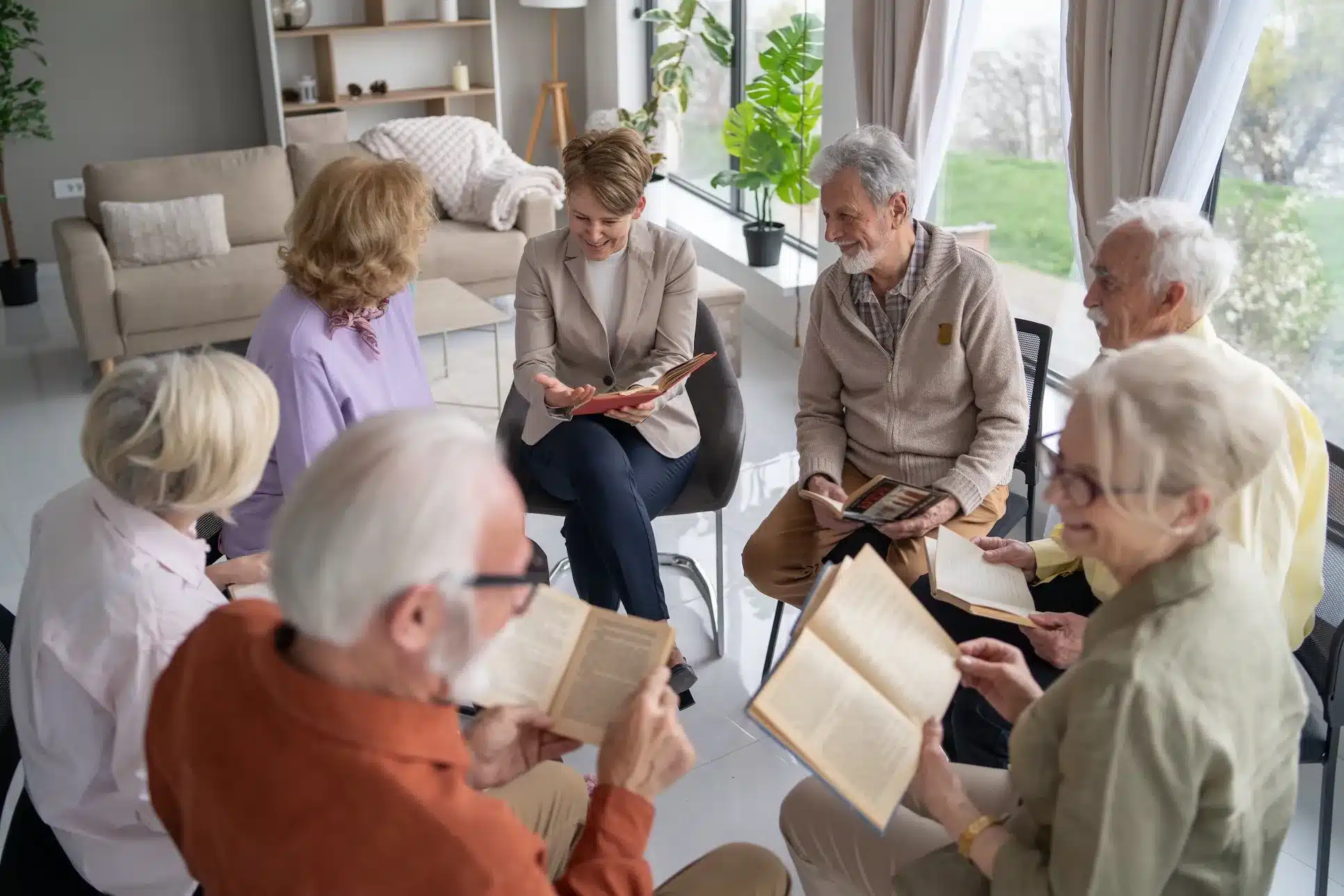
Cognitive activities offer mental stimulation through structured play and learning:
- Trivia & Brain Teasers: Team trivia covering historical events, geography, pop culture and word puzzles
- Card & Board Game Clubs: Classic games like bridge, pinochle, Scrabble and bingo
- Book Clubs & Current Events: Guided group discussions around popular literature and news topics
- Technology Workshops: Practical guidance on using tablets, smartphones and video applications to stay connected with family
- Guest Lectures & Presentations: Talks led by local historians, guest speakers or residents sharing career experiences
Arts, Music and Creative Hobbies
Creative activities offer opportunities for self-expression and skill development:
- Painting & Sketching: Guided sessions using watercolors, acrylics or charcoal, adapted for varying hand strength
- Crafting & Pottery: Hands-on projects ranging from seasonal decorations to working with clay
- Gardening & Plant Care: Raised-bed outdoor gardening, container planting and floral arrangement
- Music & Choir Groups: Sing-alongs, resident choir practices and live musical performances
- Creative Writing & Life Story Journaling: Organized sessions where residents document personal memories and family histories
Clubs, Dining Experiences and Social Gatherings
Low-pressure events help new residents meet neighbors and get comfortable with community life:
- Morning Coffee Chats: Informal morning gatherings in community lounges or bistros
- Social Happy Hours: Late-afternoon social events featuring refreshments, light snacks and live music
- Culinary Events & Demonstrations: Chef demonstrations, international food tastings and themed dinners
- Movie Nights: Scheduled screenings in dedicated theater rooms with snacks and discussions
- Faith & Reflection Groups: Multidenominational services, prayer circles and quiet study groups
Outings, Volunteering and Intergenerational Activities
Off-site trips and community partnerships keep residents connected to the broader neighborhood:
- Scenic Drives & Cultural Trips: Outings to local parks, museums, historical sites and seasonal events
- Shopping & Dining Excursions: Weekly trips to local shopping centers, markets and restaurants
- Service Projects: Assembling care packages or crafting items for local charities
- Intergenerational Partnerships: Youth reading programs and visits from local school groups
Senior Living Events That Bring the Community Together
While daily classes form the backbone of weekly routines, special senior living events mark notable occasions on the calendar. These larger gatherings bring together residents, staff and family members.
Signature senior living events include seasonal festivals, holiday dinners, concerts, art exhibitions and friendly competitions. These gatherings feature special menus, festive decorations and guest entertainment, creating memorable moments throughout the year.
How Cascade Living’s EverFit Program Supports Active Living
At Cascade Living Group, physical wellness is grounded in personal care. EverFit is our proprietary fitness framework designed to support residents across all care levels.
EverFit addresses four key components of functional health: physical strength, balance, cardiovascular health and brain fitness. Programs are adapted to each resident’s starting point, offering structured guidance to help individuals maintain physical confidence and daily independence. Program offerings vary across our communities, making each unique.
How Activities for Assisted Living Residents Are Personalized for Different Interests and Abilities
Effective programming reflects the people who live in the community. Activity teams gather resident feedback through surveys, committee meetings and informal conversations to shape monthly calendars around personal interests and past careers.
Accessibility is central to every plan. Group sizes, equipment and instruction methods are modified so that physical or cognitive changes do not prevent residents from participating. Participation is always optional – residents choose whether to join group activities, pursue independent hobbies or relax in their private apartments.
What to Look for in Assisted Living Activities and Events
When visiting potential communities, evaluating daily activity levels provides clear insight into community life. Observing how residents interact during scheduled activities for assisted living facilities helps families judge program quality.
Key factors to evaluate during a tour include:
- Calendar Balance: Look for a mix of physical, cognitive, creative, social and quiet options.
- Engagement: Observe whether activities for assisted living residents are well-attended and if staff members actively welcome participants.
- Resident Input: Ask how resident preferences influence new clubs, outings and menus.
- Adaptability: Inquire about how activities are adjusted when a resident’s physical capabilities or care needs change.
- Inclusions and Fees: Clarify which outings and supplies are included in the monthly rate versus those requiring additional fees.

Find an Assisted Living Community Where Every Day Offers Something to Enjoy
The right activity program combines physical health, mental stimulation and social connection in a way that fits each resident’s lifestyle.
At Cascade Living Group, we focus on The Difference Between Living and Living Well. We design our activities and wellness options to honor each resident’s individuality within a supportive, family-oriented environment.
Find a community near you, request the latest activity calendar, or schedule a visit to see the programs and daily life firsthand.We invite you to find a community near you, request a current activity calendar and schedule a visit to experience our programs firsthand.