Memory Care vs. Home Care for Dementia

Choosing how to best care for a loved one with memory loss is perhaps one of the most tender, challenging, and significant decisions a family will ever face. It is a journey often paved with deep love, but also with questions that keep you up at night. Wanting what’s best for your loved one requires acknowledging their individuality and supporting their autonomy. True support means balancing their needs.
As you navigate this path, you’ve likely found yourself weighing two primary options: dementia home care and a specialized memory care community. Both paths are rooted in a desire to provide support, yet they differ significantly in their environment, the level of professional supervision provided, and how sustainable they feel for the family over the long term. At Cascade Living Group, we believe that understanding these differences isn’t just about comparing services; it’s about finding the environment where your loved one can truly flourish.
Key Differences at a Glance
When we look at the heart of the matter, the choice between in-home memory care and a dedicated community often comes down to the rhythm of daily life. Memory care offers a specialized, secure environment where every hallway, meal, and activity is designed with cognitive needs in mind. It provides 24/7 supervision and a structured routine that can be incredibly grounding for someone experiencing confusion.
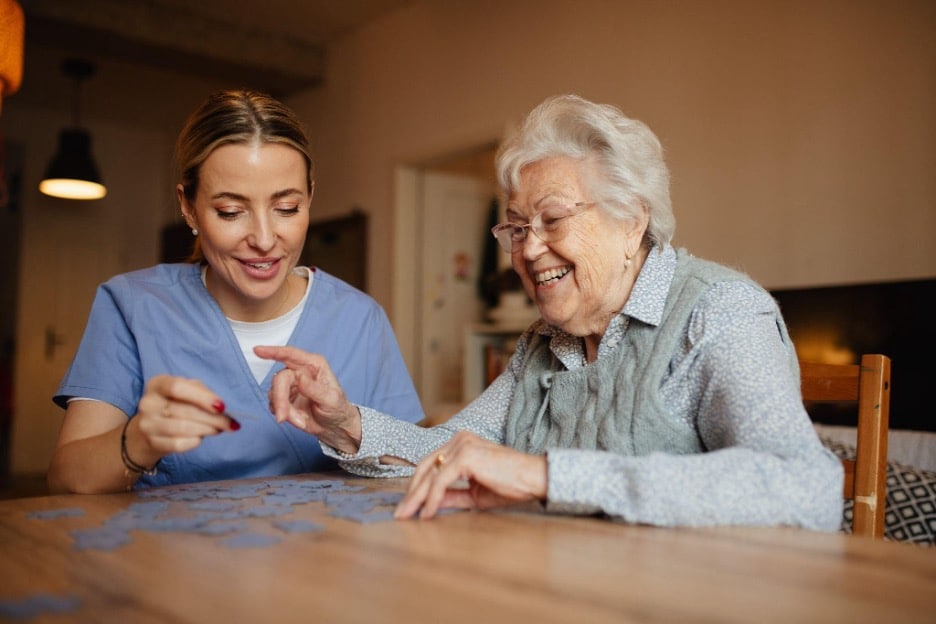
On the other hand, home care for dementia allows your loved one to remain in the surroundings they know best. It offers flexible hours and one-on-one attention from a caregiver who comes to the house.
While the familiarity of home is a beautiful gift, the major differences emerge when we consider the intensity of care needed as the journey progresses, the physical safety of the building, the specialized training of the staff, and the opportunities for social connection.
What Is Memory Care?
Memory care is a specialized type of residential living designed specifically for those living with Alzheimer’s or other forms of dementia. It goes beyond traditional assisted living by providing a secure environment that can ease anxiety and restlessness by allowing a resident to walk freely.
Cascade Living Group, memory care includes 24/7 professional support, specialized meal programs, and life-enrichment activities tailored to cognitive abilities. It is a place where the physical space and the social atmosphere are intentionally crafted to reduce anxiety and promote a sense of belonging.
What Is Home Care for Dementia?
Dementia care at home involves bringing professional caregivers into a private residence to assist with daily tasks. This can range from a few hours a week for help with groceries and light housekeeping to more intensive in-home care dementia services that involve help with bathing, dressing, and medication reminders.
It is a highly customizable option that prioritizes the comfort of remaining in a long-time family home, relying on a combination of professional help and the active involvement of family members to maintain a safe environment.
Memory Care vs. Home Care: Key Differences
1. Level of Care and Supervision
The most immediate difference is the continuity of support. In a memory care community, supervision is constant and proactive. There is always a trained professional nearby, day or night.
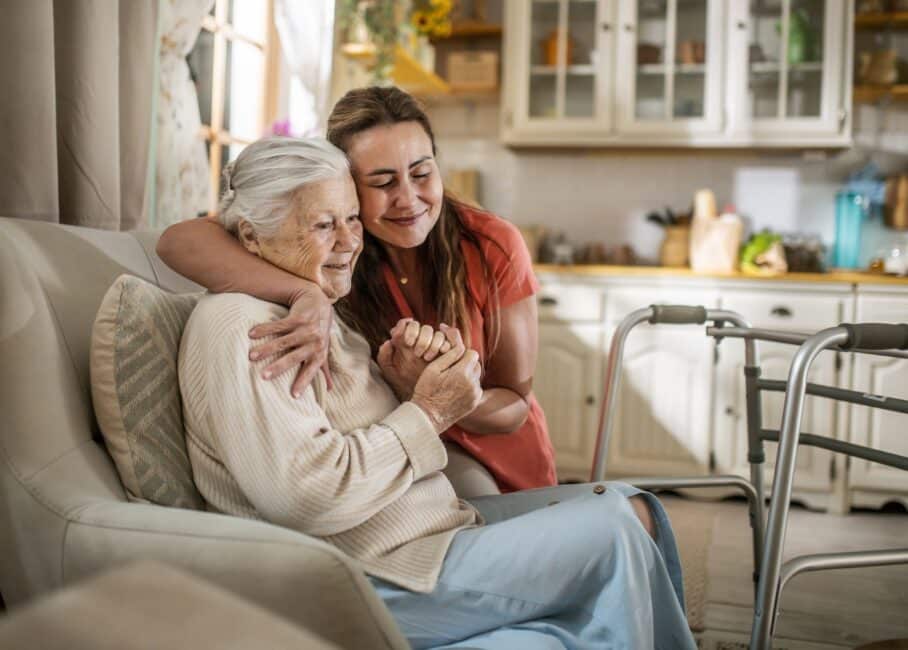
With home care for dementia, the level of supervision depends entirely on the scheduled hours. While a caregiver is there, the attention is one-on-one, but many families find that as dementia progresses, the gaps between caregiver shifts become increasingly stressful to manage.
2. Environment and Safety
Safety is often the primary driver of transition. Memory care communities offer enhanced lighting by utilizing night lights in hallways and bathrooms to reduce falls, install grab bars in showers to promote independence and safety.
In contrast, a family home – while full of memories – may eventually present risks. Stairs, narrow doorways, and even patterned rugs can become hazards. While modifications can be made, it is difficult to replicate the built-in safety of a professional care home for dementia.
3. Staff Training and Expertise
In a dedicated community, staff members receive ongoing, specialized training in dementia communication and behavioral techniques. They understand the nuances of the disease.
While many dementia home care services provide excellent training, the quality can vary. Families opting for home care often find themselves acting as care managers, responsible for vetting individual caregivers and ensuring they have the specific expertise needed for Alzheimer’s home care.
4. Social Engagement and Activities
In memory care, social engagement is built into the day. Residents can participate in memory care activities like music therapy, cognitive games, and group dining.
At home, social life can sometimes shrink. While a caregiver provides companionship, it is often more difficult to facilitate the peer-to-peer interaction and diverse activities that keep your loved one engaged and excited.
5. Cost and Long-Term Affordability
At first glance, home care may seem more budget-friendly. However, as the need for care increases toward 24/7 support, the cost of hourly in-home memory care can quickly surpass the monthly cost of a residential community.
Memory care typically offers a more predictable, all-inclusive monthly structure that covers housing, meals, utilities, and around-the-clock care.
Pros and Cons of Each Path
Memory Care
Memory care settings are usually designed for comfort and peace of mind. It is customed to that of a home like setting rather than a clinical one. A specialized memory care setting allows families to continue to engage in the personalized lifestyle of their loved ones. The consideration, of course, is the transition itself. Moving out of a family home is a significant emotional milestone that requires a gentle, personal approach.
Home Care
The beauty of memory care at home is the preservation of routine and the comfort of the familiar. It allows for highly flexible scheduling. However, the limitations often center on safety and the physical toll on family members. As dementia moves into the middle and late stages, the home may no longer be the safest place, and the cost of maintaining 24/7 home staffing can become unsustainable.

How Dementia Progression Impacts the Decision
The right choice often depends on where your loved one is in their journey. In the early stages, dementia home care is often a wonderful solution, providing just enough support to maintain independence.
However, during the middle stages, the need for routine and specialized engagement increases. This is often when families notice that a loved one is becoming more isolated or anxious at home.
By the late stages, the clinical and safety needs usually require the specialized infrastructure that only a professional community can provide.
Knowing everything there is to know about memory care early on can help you recognize the signs that it’s time for a change.
When Memory Care May Be the Better Option
It may be time to consider a community if:
- Safety becomes a concern: Wandering, forgetting to turn off the stove, or frequent falls.
- Caregiver burnout: You feel exhausted, overwhelmed, or find your own health declining.
- Isolation: Your loved one spends most of the day alone or watching television.
- The “home” doesn’t feel like home: Your loved one is frequently confused by their surroundings or asks to go home even while sitting in their living room.
Memory Care vs. Home Care for Dementia FAQs

We Are Here to Help You Navigate These Waters with Compassion and Clarity
At Cascade Living Group, we understand that this decision isn’t just about floor plans or price points – it’s about the person you love. Whether you choose the familiarity of home or the vibrant, supportive environment of our community, your goal is the same: to ensure they are treated with dignity and warmth.
We invite you to reach out, ask your questions, and discover how we can support your family’s journey. Contact a Cascade Living community near you today for a personal tour or to learn more.